


Article Index
5.1.3. Comparison of classical and molecular approaches
The terms “classical” and “molecular”, regarding the methodology of genetic modification of microorganisms, as it was already mentioned, concerns enhancing their genetic variability. This effect is achieved using classical methods by spontaneous or mutagen induced variation, by hybridization or gene transfer. These methods are inaccurate and none directed, less powerful in comparison to the molecular ones for gene modifications. But there is no doubt that there is no conceptual distinction between genetic modification of microorganisms by classical or molecular techniques which cause DNA modifications and gene transfer.
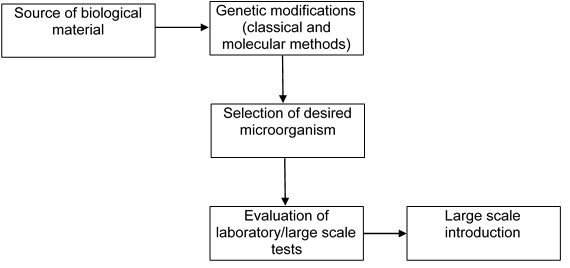
Fig. 1 shows the genetic modification of microorganisms and pathway for introduction into environment. Here both methods are unified in sense that it is no matter classical or molecular breeding methods at the steps of evaluation in laboratory, field or large scale environmental introduction are applied.
Figure 1
The underlying biological principles characterizing this concept were implicated in the EFSA reports:
- The primary focus for decision making about the introduction in the environment is the product obtained by genetic modification and selection, not the process itself.
- The characterization of the product needs information about the process used. But the nature of the process is not a sufficient criterion to decide whether the product should be more or less overseen.
- The responses of the microorganisms modified by molecular or classical methods are based on the same physical and biological laws. The accumulated knowledge about products of classical modifications could be applied on product obtained by application of molecular techniques in terms of relative safety and risk assessment.


